20 Oz Skinny Tumbler Spiderweb Wrap
As someone who’s stitched thousands of designs across apparel, home goods, and boutique merchandise—most recently a line of Halloween-themed embroidered tea towels for a local craft fair—I opened the 20 Oz Skinny Tumbler Spiderweb Wrap with quiet curiosity. Not hype. Not urgency. Just the kind of focused attention you give a new tool before committing thread, time, and client trust to it.
A Design That Breathes Like a Seasonal Moment
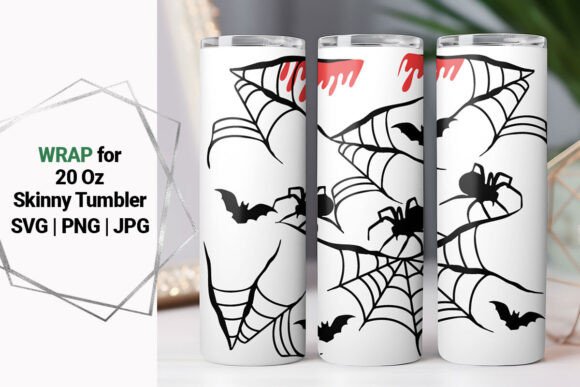
First impression? This isn’t a frantic, overwrought spiderweb. It’s balanced—symmetrical but not stiff, intricate but not fussy. The central web flows outward in clean, slightly organic loops, with subtle breaks and delicate radial lines that suggest motion rather than rigidity. There’s breathing room between elements, which is rare in tumbler wraps designed for digital display—not embroidery readiness. That spacing matters: it translates directly to stitch clarity on fabric, especially when scaled down for smaller hoops or layered garments.
I immediately pictured it stitched onto a natural linen apron for a small-batch bakery—subtle enough for branding, evocative enough for seasonal charm. Or as a single embroidered patch on the chest of a black cotton sweatshirt, paired with minimalist lettering. It doesn’t scream “Halloween.” It whispers “October,” and that’s where its versatility lives.
Where It Shines—and Where It Asks for Thought
In real embroidery use, the 20 Oz Skinny Tumbler Spiderweb Wrap performs best when treated like a refined accent—not a full-cover motif. On custom apparel like sweatshirts or tote bags, it anchors beautifully near a pocket, sleeve cuff, or hem. Its vertical proportion suits the lean silhouette of a skinny tumbler, yes—but also works surprisingly well on narrow surfaces like baby onesies (upper back placement), cap brims (centered low), or pillow covers (corner detail).
That said, I tested a scaled-down version on a lightweight rayon-blend tee and noticed how fine outer lines softened under dense fill stitching. On stretchy fabric—think ribbed knit baby caps—the web’s symmetry can distort if stabilizer isn’t firmly layered underneath. And on dark fabric? The design’s open structure means thread color contrast becomes critical. A charcoal gray satin stitch on black twill reads elegantly; a pale ecru on navy fades unless you boost density or add an underlay.
It’s not ideal for ultra-tiny hoops (under 3”) without simplification—those delicate radial threads risk becoming indistinct or fraying at stitch ends. Likewise, avoid placing it over seams, darts, or curved surfaces like baseball cap crowns unless you’ve pre-tested tension and hoop alignment. The design assumes a relatively flat, stable embroidery field.
What It Adds to Your Handmade Product—and What It Doesn’t Promise
This isn’t a “plug-and-stitch” graphic. It’s a machine embroidery design that rewards intentionality. When executed well—with proper stabilizer, thoughtful thread selection, and mindful scaling—it elevates perceived value. Customers notice clean line work. They feel the care in spacing and balance. That translates to higher confidence in your brand, whether you’re an Etsy seller listing personalized gifts or a small shop owner curating boutique merchandise.
But let’s be clear: the 20 Oz Skinny Tumbler Spiderweb Wrap won’t carry weak execution. If your satin stitch tension is off, those smooth web arcs will pucker. If your fill stitch density is too high on thin fabric, the center will buckle. It reveals technique—not hides it. That’s why it builds trust: it looks professional only when stitched professionally.
Practical Notes from the Hoop
Before running this on client work—or uploading it to your digital product store—here’s what I do every time:
- Test on scrap fabric first, using the exact stabilizer and thread combo you plan to use. Linen, cotton duck, and midweight polyester all behave differently under this design’s layout.
- Check thread color contrast in natural light—not just screen preview. A design that pops on white may vanish on heather grey.
- Review stitch density in your embroidery software. If the original file lacks density specs, assume moderate fill and adjust based on fabric weight.
- Confirm hoop size compatibility. The wrap’s height-to-width ratio fits standard 4x4 and 5x7 hoops cleanly—but verify alignment markers if stitching on curved items like tumblers or mugs (yes, some embroiderers adapt these for heat-transfer prep).
- Inspect small details at 200% zoom: are radial lines crisp? Do anchor points align cleanly? Fuzzy edges here mean fuzzy results on fabric.
- Test in black-and-white mockups—not just color. Many buyers imagine products in monochrome first, especially for nursery decor or wedding-adjacent gifts.
- Compare light and dark fabric backgrounds side-by-side. This design gains depth on darker substrates but loses definition on very light, shiny fabrics like satin.
- Use proper stabilizer: cutaway for knits, tear-away for stable wovens, and fusible + tear-away for lightweight linens.
- Confirm licensing before selling finished embroidered items or reselling the digital embroidery file. Since it’s listed under Graphics and Crafts, commercial use may require verification—don’t assume.
A Quiet Asset for Intentional Makers
The 20 Oz Skinny Tumbler Spiderweb Wrap won’t dominate your catalog. It won’t go viral on social media. But it will sit quietly on a hand-stitched kitchen towel and make someone pause. It’ll land softly on a baby’s onesie and feel like a whispered tradition—not a trend. For embroidery designers building a library of reliable, seasonally resonant assets, it’s the kind of digital embroidery file that earns repeat use because it behaves predictably, stitches cleanly, and respects the craft behind it.
If you’re curating designs for holiday embroidery, personalized gifts, or small shop merchandise—especially with a focus on texture, subtlety, and handmade presentation—this one earns space. Not for its flash, but for its fidelity: to theme, to technique, and to the quiet pride of making something that feels both intentional and effortless.