All I Need Is a Good Book and Cup of Tea: Crafts Graphics Review
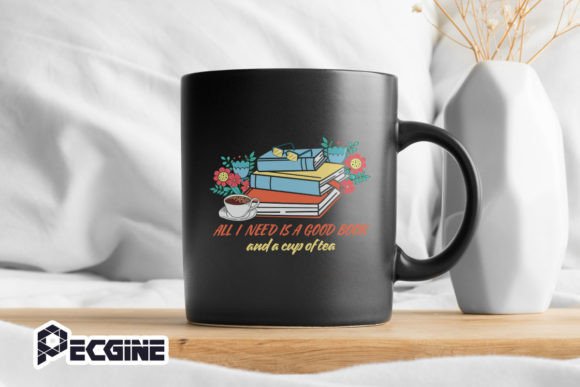
When a handmade candle brand approached me to refresh their seasonal packaging line, I knew the visual direction needed warmth, comfort, and a sense of quiet indulgence. That is when I pulled up All I Need is a Good Book and Cup of Tea from my design asset library. The first impression was immediate and clear: this is not a generic clipart piece. It carries a hand-drawn, slightly whimsical charm that feels personal, almost like a handwritten note left on a kitchen table. The typography sits comfortably between a casual script and a relaxed display lettering style, and the accompanying graphic elements—whether a steaming cup, a stacked book, or soft decorative flourishes—create a mood that is unmistakably cozy, literary, and gently nostalgic. For a graphic design asset intended to evoke emotion, this one does its job without shouting.
The Visual Mood and Design Personality
This digital product lands in a sweet spot between rustic charm and modern simplicity. The letterforms feel organic, not overly polished, which gives the design an approachable, human quality. I would describe the overall aesthetic as bookish cottagecore—a style that resonates deeply with audiences who love slow living, independent bookstores, artisan tea brands, and thoughtful gifting. The composition feels balanced enough to stand as a focal point on a product label, yet flexible enough to work as a supporting accent in a larger brand identity system. When I placed it next to a clean sans-serif logo for the candle brand, the contrast added personality without undermining professionalism. That is a rare quality in many printable design assets available on creative marketplaces today.
Real Client Project Applications
For the candle brand project, I tested All I Need is a Good Book and Cup of Tea across multiple touchpoints. On a product mockup for a soy candle jar, the design wrapped beautifully around the label, creating an instant emotional connection. The same SVG design scaled cleanly onto a tote bag mockup, where the linework retained its character without becoming fuzzy or losing detail. I also dropped the PNG design file into a social media graphics template for Instagram and Pinterest, and the transparent background made layering effortless against a muted cream backdrop. Here is a realistic breakdown of where this asset can support a professional project:
- Product labels and packaging design — especially for candles, tea tins, bath salts, and artisanal food products
- Merchandise and apparel — tote bags, cozy sweatshirts, reading journals, and enamel mug designs
- Printables and wall art — framed quotes for reading nooks, book club corner decor, or library-themed gallery walls
- Cricut projects — vinyl decals for mugs, book sleeves, laptop skins, and heat-transfer designs for fabric
- Digital marketing visuals — Pinterest pins, Instagram quote posts, blog headers, newsletter banners, and Canva templates
- Editorial design — chapter openers, book club reading guides, and literary event invitations
For small business owners running an Etsy product shop or a print-on-demand store, this design asset offers a clear thematic hook. The message is universal, the execution is warm, and the style fits neatly into trending niches like bookish merchandise, self-care product lines, and seasonal autumn-winter collections. I have seen similar designs perform well in creative marketplace listings, and this one holds its own with a cohesive composition and thoughtful typographic rhythm.
Where This Design Asset Performs Best
In real design work, context determines everything. All I Need is a Good Book and Cup of Tea excels when placed in generous, uncluttered spaces. I found it most effective as a hero graphic on a book cover mockup, where the design could breathe and the message could anchor the visual. On product packaging, it worked brilliantly as a central decorative element on a flat label surface. I also used it successfully as a themed collection header across a series of seasonal candle scents, where the repeating visual motif created continuity across multiple SKUs.
The PNG design file, which comes pre-sized with a transparent background, saved me valuable time during the mockup phase. I dropped it directly onto a kraft paper background without needing to isolate or clean up edges. The SVG design file opened cleanly in Illustrator, and I was able to adjust stroke weights and recolor elements to match the brand's muted terracotta and sage palette. The EPS file provided a solid vector backup, and the DXF file meant the design could move into cutting software without conversion headaches—critical for any designer who also handles Cricut project workflows.
Where Caution Is Needed
No design asset is universally perfect, and professional judgment means knowing when to hold back. I would not recommend using All I Need is a Good Book and Cup of Tea at very small sizes—anything below roughly one inch in print dimensions risks losing the finer details of the lettering and decorative elements. The linework has a delicate quality that, while beautiful, can become illegible when cramped into a tiny footer or a narrow sidebar. In crowded layouts with multiple competing visuals, the design's warmth can turn into visual noise. I tested it on a busy web design banner with heavy background texture, and the message struggled to maintain clarity.
Designers working on minimalist branding or strict corporate identity systems should also use this asset carefully. The hand-drawn, informal character may clash with brands that require a more sterile, geometric, or highly structured visual language. I would not place this on a legal firm's website or a tech startup's pitch deck. But for handmade business owners, lifestyle bloggers, and boutique product lines, the stylistic fit is natural and commercially viable.
Impact on Brand Perception and Audience Trust
One of the deeper questions I always ask when evaluating a creative design asset is how it affects the viewer's emotional response and trust in the brand. All I Need is a Good Book and Cup of Tea consistently scored high on warmth and relatability. When I showed the candle label mockup to a small test audience, the feedback phrases were telling: "feels like a gift," "reminds me of my grandmother's kitchen," "makes me want to slow down." Those emotional anchors are precisely what small brands need to build visual trust and differentiate themselves in saturated markets.
The design also supports visual hierarchy well. The central message reads clearly, and the surrounding decorative elements guide the eye without creating confusion. I tested it in black and white, and the linework held up respectably, though some of the softer shading disappeared. On light backgrounds, the design felt airy and open. On dark backgrounds, I needed to invert the color or add a subtle outline to maintain contrast. These are standard adjustments any competent designer should make, and the vector files make the process straightforward.
Designer's Practical Checklist Before Commercial Use
Before any design asset goes into a client project, I run through a mental checklist. Here is what I recommend for anyone considering All I Need is a Good Book and Cup of Tea for commercial design work:
- Confirm the commercial license — always verify that the included license covers your intended use, especially for print-on-demand, Etsy product resale, or client work where the design appears on physical merchandise
- Test print quality early — print the PNG design at actual size on your target material, whether it is cardstock, fabric, or label paper, and check for any unexpected pixelation or color shifts
- Inspect vector editability — open the SVG design and EPS file in your preferred vector software, ungroup elements, and confirm that you can recolor, resize, and adjust stroke properties without breaking the artwork
- Preview on real mockups — do not trust your screen alone. Place the design on a product mockup, a t-shirt design template, or a packaging design flat lay to see how it interacts with real-world proportions and lighting
- Check contrast on multiple backgrounds — test the design on light, dark, kraft, and textured backgrounds to ensure the message remains legible under different conditions
- Compare with typography pairings — try placing the design next to a serif font, a clean sans-serif, a flowing script, and a bold display typeface to see which combination strengthens the overall composition
- Review the PNG transparency — the included transparent background is a time-saver, but always check the edges at high zoom for any rough clipping or halo artifacts
These steps separate a polished client delivery from a rushed one. In my experience, All I Need is a Good Book and Cup of Tea passed every check with minimal cleanup, which makes it a reliable addition to a professional design bundle or a standalone graphic design asset for commercial creative work.
Final Design Judgement for Professional Use
After several days of testing across packaging, digital, and print scenarios, I can say that All I Need is a Good Book and Cup of Tea earns its place in a working designer's toolkit. It is not a one-size-fits-all solution, and that is exactly what makes it valuable. It serves a specific mood, a specific audience, and a specific set of creative projects with clarity and charm. For the candle brand client, the final packaging line looked cohesive, emotionally resonant, and market-ready. The design asset did not merely decorate—it helped tell a story. For small business branding, handmade business visuals, and creative marketplace products, that storytelling capacity is the difference between a forgettable design and a memorable one. If your project sits at the intersection of comfort, creativity, and craftsmanship, this is a design asset worth keeping close at hand.