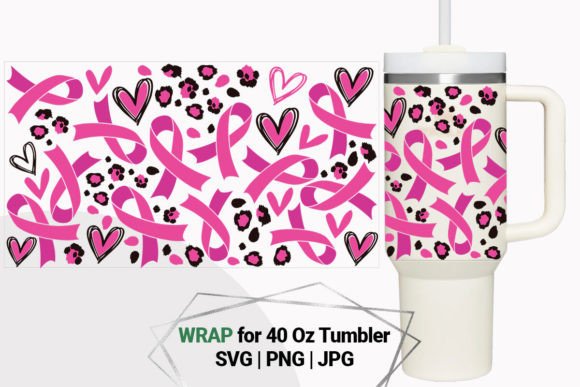
Breast Cancer Wrap for 40 Oz Tumbler – Embroidering with Heart
When this Breast Cancer Wrap for 40 Oz Tumbler design landed on my desk, I wasn’t looking at it as just another graphic file. I was already imagining how it could live on a custom embroidered tote bag, a cozy sweatshirt, or a set of boutique tea towels. The file pack includes SVG, PNG, PDF, JPEG, and EPS formats, which immediately signals that it’s built for versatility—perfect for a designer who wants to adapt it into embroidery projects, mockups, or sublimation prints. But as someone who stitches day in and day out, I needed to see if this design could hold its own when translated into thread and fabric.
My first impression: the design gracefully balances a meaningful symbol with a stylish wrap layout. It’s not just a ribbon; it’s a full wrap pattern meant to encircle a 40 oz tumbler. That curved, elongated composition opens up a lot of creative doors for embroidery, especially for projects that benefit from horizontal or wraparound placement. The mood is hopeful, strong, and undeniably feminine—perfect for breast cancer awareness merchandise, survivor gifts, and fundraiser items. The visual personality feels contemporary and clean, with just enough detail to be interesting without overwhelming the eye.
First Look: Shape, Theme, and Emotional Pull
The wrap design is meant to be printed on a tumbler, but as an embroidery designer, I immediately saw its potential as a decorative band across the chest of a sweatshirt, along the hem of a kitchen towel, or even spanning the front of a structured tote bag. The layout naturally guides the eye across the surface, which works beautifully for machine embroidery because it creates a sense of movement even on flat fabric. The theme is unmistakable—pink ribbons, awareness elements, and a layout that whispers support and solidarity. It’s the kind of design that customers actively search for in October, but truthfully, it carries year-round relevance for many small shops.
Because the file pack includes both vector (SVG, EPS) and raster (PNG, JPEG) formats, you’ve got the flexibility to scale, edit, and digitize the design without losing quality. For embroidery, that means I can pull the SVG into my digitizing software, trace the main elements, and start building stitch files that honor the original layout. The PDF is a bonus for creating client proofs or workshop handouts. I appreciate that the designer didn’t lock us into one format—this is a Graphic product that respects a craft business owner’s workflow.
Real-Life Embroidery Scenario: A Custom Tote Bag for a Fundraiser
Let me walk you through how I see this design being used in a real project. I recently had a client who runs a small Etsy shop specializing in personalized gifts for cancer survivors. She wanted a design that could be embroidered on canvas tote bags for a local breast cancer awareness walk. The brief was clear: something that felt personal, not mass-produced, and could carry the weight of the cause without looking kitschy.
I pulled up the Breast Cancer Wrap for 40 Oz Tumbler file and immediately started testing it in my mind. The wrap format, when placed horizontally across the lower front of a tote, would create a beautiful foundation. I could see using a soft pink satin stitch for the ribbons, with a subtle metallic silver thread for any outlined accents—if the design allows. The key is to keep the stitching clean and not let the density overpower the fabric. Since the original graphic is a tumbler wrap, I’d need to adjust the proportions slightly to fit a standard 12x18 inch tote area, but the SVG makes that effortless.
The emotional response from clients would be immediate. This isn’t just a generic pink ribbon; the wrap layout gives it a fresh, modern look that feels like a boutique item. Customers would see it as a thoughtful, wearable piece of support—and that’s exactly the kind of value that boosts trust and repeat sales in a handmade business.
Embroidery Performance: Where This Design Shines
Now, let’s talk about how this design performs once needles start moving. Because it’s a graphic asset, not a pre-digitized embroidery file, you’ll need to do the digitizing yourself or hire it out. That’s not a drawback—it gives you full control over stitch types, thread colors, and density. The clean lines and defined color blocks in the PNG suggest the design will digitize well, with clear separation between elements. I’d recommend using a combination of running stitch for fine outlines, satin stitch for ribbon edges, and a light fill stitch for any larger areas, keeping the stitch count manageable for quicker production.
For fabrics, this design works best on stable, medium-weight materials like cotton canvas, twill, denim, or linen. I’d avoid anything too stretchy or thin unless you’re planning to use a heavy cutaway stabilizer. The wrap format, with its horizontal orientation, is ideal for flat items: tote bags, tea towels, pillow covers, and even the back of a jean jacket. On a sweatshirt, place it across the chest or along the upper back for a balanced look. I’ve seen too many detailed designs get lost on textured fabrics like fleece or terry cloth, so test on a similar scrap first.
Where to Use Caution: Small Hoops, Curves, and Delicate Details
While the design has a lot of potential, it’s not a one-size-fits-all solution. Here are a few situations where you’ll need to be extra careful:
- Small hoop sizes: The wrap shape is inherently wide. If your largest hoop is only 4x4 inches, you’ll have to split the design into multiple hoopings or scale it down significantly, which might lose the impact. I’d recommend using at least a 5x7 or 8x12 hoop for the full effect.
- Curved surfaces like caps: The linear wrap layout doesn’t naturally conform to a baseball cap’s curve. You could segment the design or use just a portion, but the full wrap won’t sit well on a cap without distortion.
- Dark fabrics: If the design relies on light pinks and whites, you’ll need to consider contrast. Test the digitized version on a dark charcoal or black fabric; sometimes the subtle ribbon details can fade unless you add a light underlay or outline.
- Frequent washing: For items like kitchen towels or baby clothes that will be washed often, keep the stitch density moderate. Overly dense satin stitching can become stiff and uncomfortable, and if the design has very fine elements, they might snag.
Product Value and Customer Perception
From a business perspective, the Breast Cancer Wrap for 40 Oz Tumbler brings a lot of value. It’s a design that taps into a deeply emotional and supportive community. When you embroider this onto a product, you’re not just selling a tote bag or a sweatshirt—you’re offering a way for someone to carry a message of hope and strength. That emotional connection translates directly into higher perceived value, better customer engagement, and stronger brand loyalty.
For Etsy sellers and craft fair vendors, having a recognizable yet tasteful awareness design can set your booth apart. I’ve seen too many overdone pink ribbon designs that feel generic. This wrap layout, with its curved, wraparound flow, gives a fresh take that customers will notice. It also works beautifully in product photography when you use the JPG or PNG for mockups, helping you create cohesive listings that look professional and heartfelt.
Practical Designer Notes: Before You Start Stitching
Every time I test a new graphic for embroidery, I run through a mental checklist. Here’s what I’d recommend for anyone planning to use this design:
- Digitize thoughtfully: Use the SVG or EPS to get clean outlines. Set your stitch types based on the final product—satin for crisp edges, fill for larger areas, and running for fine text or details. Keep the design size manageable for production.
- Test on scrap fabric first: Don’t risk your final tote or sweatshirt. Stitch a sample on the same fabric and stabilizer combination you’ll use. Check for puckering, thread breaks, and overall clarity.
- Check thread color contrast: The pink shades in the graphic might look different on screen. Compare thread charts, and consider how the colors will look on light versus dark backgrounds. Soft pastels on white can look washed out, so a slightly deeper pink might be needed.
- Review stitch density: If the design has large filled areas, reduce density to keep the fabric soft and avoid stiffness. Nobody wants a cardboard-feeling patch on their chest.
- Confirm hoop size: Measure the final digitized design. If you’re using a multi-needle machine, make sure the hoop can accommodate the width without re-hooping. A 8x12 or larger hoop is ideal.
- Test in black and white: Convert the design mockup to grayscale to see if the contrast holds up without color. That’s a good indicator of whether the stitch definition will be clear on any fabric.
- Understand licensing: The product description doesn’t specify a commercial license. Before you sell finished items with this design embroidered, reach out to the creator to confirm you can use it for commercial purposes. The same goes for digital resale—always protect your small business by verifying rights.
Final Thoughts from a Working Designer
I go through a lot of design files each week, and many don’t make the cut for embroidery. The Breast Cancer Wrap for 40 Oz Tumbler, while originally a graphic for sublimation, has the bones to become a truly meaningful embroidery project. Its shape is what sets it apart—that wrap-around composition is uncommon in embroidery design, and it gives you the chance to create something that feels cohesive and intentional, whether it’s a single statement piece or a full line of awareness merchandise.
For makers who are willing to digitize and test, this design opens up a world of possibilities: personalized gifts for survivors, fundraising products, boutique accessories, and even subtle home decor items like embroidered pillow covers. The key is to approach it with the same care you’d give any custom client work. Test thoroughly, choose your fabrics and stabilizers wisely, and let the design’s emotional heart guide your color and placement choices.
If you’re a craft business owner or an Etsy seller looking for a design that balances meaning with modern style, this one is worth your time. Just remember—it’s a graphic asset, not a ready-to-stitch embroidery file. But with the right digitizing, that might just be its greatest strength, because you can adapt it exactly to your products and your customers’ needs.