Grey Watercolor Clouds Tumbler Wrap PNG
First Hand Look at a Soft, Painterly Design
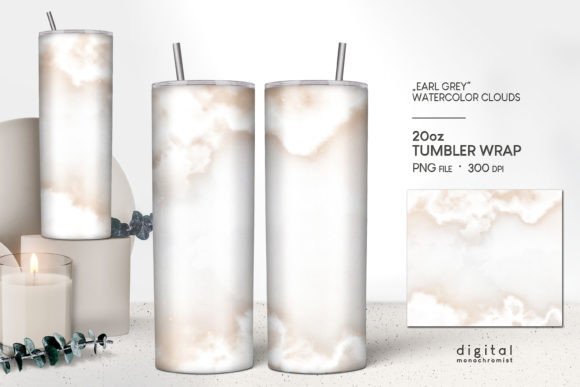
When I downloaded the file and saw the grey watercolor clouds, I immediately felt a sense of calm. The wash of pigment is airy, not overpowering, and the scattered droplet-like spots give it a true hand-painted feel. As a working designer, my mind doesn't just see a pretty picture—I start picturing how this would translate to thread, which fabrics would show it best, and what kind of finished product would make someone stop scrolling and click “add to cart.”
This isn’t a crisp, hard-edged graphic. It’s soft, almost dreamy, and that changes how I’d approach any embroidery project. The muted grey palette is forgiving, and the looseness of the watercolor style means a little imperfection in stitching can actually add to the charm. That’s a huge plus for small-batch makers and anyone who wants their handmade goods to feel like curated art, not mass-produced merchandise.
Mood, Personality, and the Projects It Fits
The visual personality of this design sits somewhere between modern minimalism and a cozy nursery vibe. It’s not overly cute, so it straddles adult and baby markets easily. Because the clouds are grey instead of bright blue or pink, it reads as unisex and age-neutral. I can see this on a linen pillow cover in a light-filled living room just as naturally as on a baby’s flannel blanket.
In my studio, I’d mentally assign this to a few go-to product categories:
- Custom tote bag design with a single, centered cloud panel
- Soft baby embroidery on a onesie or receiving blanket
- Minimalist sweatshirt embroidery for a small boutique line
- Embroidered pillow covers with a subtle, textural accent
- Layered applique design using sheer fabrics to mimic the watercolor wash
What makes it versatile is the lack of a defined border. The cloudy edges fade out, so the design can fill a space without looking like a rigid patch. That soft fade is also a challenge—digitizing a blurred edge in embroidery takes careful planning.
Translating Watercolor to Thread
Make no mistake: this is a PNG digital file, not a ready-to-stitch embroidery file. It’s a graphic asset from the Crafts category, listed under Graphics, and it’s meant for tumbler wraps, but as an embroidery reviewer, I’m constantly looking at flat art and asking, “Can I make this work with a needle and thread?” The answer is yes, but the approach matters.
The watercolor effect depends on irregular pigment distribution, and that’s the opposite of how most machine embroidery works. A standard satin or fill stitch can look too solid and kill the airy feel. I’d digitize this with a low-density fill stitch, maybe using a pattern like stipple or a random scatter fill. Some digitizers call it a watercolor stitch or an artistic fill. Variegated thread in grey tones can also mimic the uneven wash and reduce the need for multiple color changes.
If I were doing a machine embroidery design version for a client, I’d test at least two versions: one with a subtle running stitch outline around the cloud shapes for definition, and one completely edgeless. The edgeless version feels more authentic to the original watercolor, but it can look lost on busy fabric. I’d lean toward the outlined version for finished product pieces that will be photographed for Etsy listings, because a little definition helps the camera pick up the design.
Stitch Density and Stabilizer Notes
When I test a design like this, I always start with scrap fabric. The cloud shapes are organic, so there’s no perfect alignment grid. I recommend using a piece of the same fabric you’ll sell, whether it’s a cotton tote, a fleece sweatshirt, or a knit baby garment. Stretchy fabric is the trickiest here because the watercolor effect relies on lightly stitched areas that can distort if the fabric moves. A good cutaway stabilizer is non-negotiable, and I’d add a temporary spray adhesive to keep everything still.
Hopping between thread colors is minimal—maybe three grey shades plus a white or off-white for highlights. I’d pick matte polyester threads because they don’t add sheen that would fight the soft watercolor mood. If you want a subtle shimmer, a silk-finish thread in a very light grey could work, but test it first. I’d also run a black-and-white mockup photo of the stitched sample to check contrast. Sometimes what looks elegant in color washes out in monochrome, and that’s a problem if a customer sees your product on a phone screen.
Real-Life Scenario: The Custom Baby Shower Gift
I’m picturing a situation that happens in my studio every few weeks. A customer messages me asking for a personalized baby blanket, something not too pink or blue, and they want it to feel like a keepsake, not a store-bought item. I’d pull up this Grey Watercolor Clouds Tumbler Wrap PNG and digitize it for a soft flannel blanket, stitching the cloud swath across one corner and adding the baby’s name in a small, elegant script beneath it.
The result would be a handmade product that looks carefully designed, not just a slapped-on motif. The watercolor clouds give the blanket a nursery-decor feel that’s trendy but not trendy enough to date itself. Parents love that it’s neutral; it works for any gender, and it’s the kind of gift that gets passed down. From a seller’s perspective, that means higher perceived value and a better chance of repeat orders from friends of the new mom.
Boutique Tote Bags and Small Shop Merchandise
Another use case I’d explore is a line of canvas tote bags for a local boutique. The design’s rectangular shape, originally created for a straight 20 oz tumbler, actually fits the front panel of a standard tote surprisingly well. I’d position it vertically, maybe with a few inches of breathing room at the bottom. The soft grey clouds would contrast nicely with natural canvas, and I’d add a single-word phrase like “wander” or “breathe” in a light thread to complement the cloud mood.
When I’m building a craft business product line, I think about how the design photographs. The watercolor effect, even when stitched, looks like a carefully painted accent. That translates to great printable mockup images and lifestyle shots. It also gives the product a handmade authenticity that big-box embroidery can’t copy. I’d market these totes as “artisan cloud bags” and keep the packaging minimal.
Where You Need to Be Careful
This isn’t an all-purpose design. The watercolor fade means small details near the edges can disappear. If you try to stitch this on a small hoop—say a 4x4 inch—you’ll either have to scale down the whole design, which risks turning the soft clouds into a muddy blob, or crop it aggressively, which might cut off the wispy parts that make it special. I’d recommend a hoop size of at least 5x7 inches, and larger is even better. Check the actual pixel dimensions of the PNG before you digitize; a tumbler wrap file is often long and narrow, so you might need to rotate it or adjust the composition.
Curved surfaces like caps are a struggle. The long rectangular proportions don’t wrap well around a hat crown. If a client insists on a cap, I’d extract a single cloud cluster and digitize a small patch, but you lose the sweeping watercolor flow. Similarly, highly textured fabrics like waffle weave or chunky knit can disrupt the soft watercolor illusion, making the stitch detail look uneven. Smooth, tightly woven fabrics are your best friend here.
Licensing and Commercial Clarity
Before you stitch one item for sale, pause and check the license. The product description says you get 1 x PNG design file, but it doesn’t spell out whether finished physical products are allowed. Some digital product sellers permit commercial embroidery use; others only allow personal projects. I’ve learned the hard way that assuming is a mistake. Reach out to the seller, get a clear answer, and save the email. If you’re an Etsy seller or running a small shop product line, this one step protects your shop from takedowns.
Also, remember that this is a design asset, not a stitch file. You cannot simply load it onto a machine. You’ll need to digitize it yourself or pay a digitizer. The cost of digitizing should be factored into your product pricing. A good watercolor digitization can run higher than a standard solid fill because of the manual technique involved, but the result is a handmade product that stands out.
Testing on Light and Dark Backgrounds
I always test on at least two backgrounds: a light cream and a charcoal grey. On light fabric, the grey watercolor clouds read clearly, but the lightest washes can blend into the fabric. I’d slightly boost the contrast in the digitizing phase for those whispery areas. On a dark fabric, the design might need a white underlay or a lighter thread palette to stay visible. Without that, the grey clouds can disappear into a dark sweatshirt. I’d run a test stitch on a dark fabric scrap and ask a friend to look at it from across the room to gauge real-world visibility.
How Buyers and Gift Recipients React
In my experience, customers respond to this kind of design because it feels like a custom piece of art. The watercolor effect suggests a painter’s touch, and that boosts giftability. People are more likely to buy a cloud-embroidered baby blanket for a shower gift than a generic cartoon animal. It also fits a range of styles, from boho nurseries to modern farmhouse decor. That wider appeal means fewer “not my style” returns and more confident purchases.
For craft fair products, this design draws people in. It’s not loud, and that’s a good thing—it invites a closer look. I’ve watched shoppers pick up a similar watercolor-stitched pillow, run their fingers over the texture, and smile. That tactile reaction is what sells handmade.
Keeping the Design Fresh for Multiple Projects
One digital file, many possibilities. Beyond the obvious blanket and tote, I’d try this on a set of tea towels with a small cloud corner, or on a pillow cover paired with a simple linear quote. For holiday embroidery, you could add tiny silver stars or a subtle moon for a winter night sky feel. The key is to let the watercolor clouds be the star and not overcrowd the composition.
If you’re a digital product seller yourself, you might use this PNG as part of a printable mockup for branding, but remember that the tumbler wrap dimensions might need adjusting for other templates. As a design asset, it’s flexible, but you have to do the prep work.
Final Thoughts Before You Stitch
I’ve worked with hundreds of embroidery designs, and this one has a quiet confidence that works well for creative entrepreneurs who want to offer something with an artistic edge. It’s not beginner-friendly because of the digitizing challenge, but if you’re comfortable with your software and willing to test, you can produce a genuinely beautiful finished product. The Grey Watercolor Clouds Tumbler Wrap PNG gives you a painterly starting point; the rest is up to your skill and your eye for soft, livable design.
Check your hoop, test your thread, respect the license, and you’ll have a piece that brings a little sky into someone’s everyday life.