Whatever Spices Your Pumpkin Skeleton: Graphics & Print
First impressions: the spooky-meets-sarcastic mood
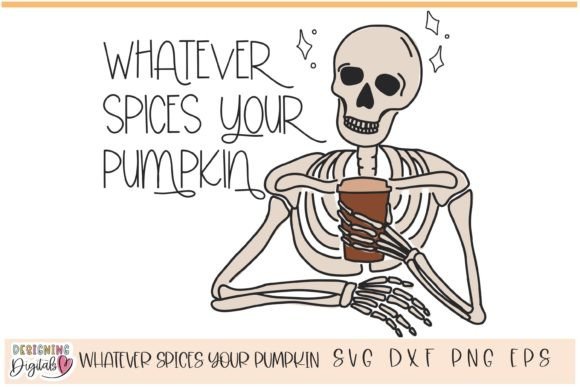
When I unzipped Whatever Spices Your Pumpkin Skeleton, I immediately smiled. The design reads like a cheeky inside joke whispered at a Halloween party — it’s playful, a little sarcastic, and completely unbothered. The skeleton character isn’t trying to be cute in a traditional way; it’s got attitude, the kind that makes a customer stop scrolling and chuckle. In my handmade business, that’s exactly the reaction I chase. This isn’t a generic pumpkin graphic. It’s a funny Halloween SVG that pairs a classic seasonal icon with a dry, witty phrase, and the result feels fresh for crafters who want personality over plain pumpkins.
The linework is intentionally bold yet clean, which told me right away it would cut well on a Cricut or Silhouette. The mood lands somewhere between elevated farmhouse smirk and modern minimalist decor — it could sit on a front porch sign or a sassy mug without looking out of place. If I were to categorize the visual style, I’d call it playful with a wink of irreverence. It doesn’t scream “baby’s first Halloween”; it whispers “I’m here for the candy and the chaos.”
Who this design actually speaks to
From years of selling at craft fairs and on Etsy, I’ve learned that design assets live or die by the buyer they attract. Whatever Spices Your Pumpkin Skeleton will resonate with people who love Halloween but roll their eyes at overly sweet motifs. Think millennial and Gen X shoppers hunting for t-shirts, enamel-style stickers, or funny gift tags for friend groups. It’s perfect for the customer who buys a “Spooky Season” tumbler but also wants it to say something snarky. For handmade sellers, that means you can tap into a niche that’s less crowded — the sarcastic seasonal buyer who’s willing to pay for a laugh.
I’ve noticed this style also works for small businesses that brand themselves as cozy-but-edgy, like a coffee shop that sells seasonal merch, or a planner sticker creator who wants a Halloween release that isn’t just bats and spiders. This graphic design asset can pull in customers who appreciate a clean illustration with a message that feels like a group chat text.
Where it shines: real product ideas for crafters and sellers
Right after previewing the files, I started mentally slotting Whatever Spices Your Pumpkin Skeleton into my product lineup. Here’s where I see it performing best:
- T-shirt design — the SVG is simple enough to weed and press on a unisex tee, and the phrase has instant conversation-starter power.
- Mug design — sublimation or adhesive vinyl on a matte white mug would make the black lines pop, creating a giftable coffee companion.
- Tumbler wraps — the skeleton graphic scales neatly for 20oz skinny tumblers, and the messy-playful vibe matches the tumbler culture.
- Sticker design — print as a kiss-cut sticker sheet accent or a single die-cut sticker for water bottles and laptops. The bold lines keep it legible at moderate sizes.
- Tote bags — a tote with this design feels like a seasonal reusable grocery bag with personality.
- Greeting cards and gift tags — I’d use the PNG version to create a card front, layering it over a muted orange or kraft background. For gift tags, the design can sit on a small tag with a hole punch at the top, perfect for party favors.
- Printable wall art — drop the design into a print template with a simple frame mockup, and you’ve got an instant digital product for Etsy.
- Planner stickers and scrapbooking — the PNG with transparent background makes it easy to add to digital planner pages or print as a decorative element.
- Party decorations — use it on cupcake toppers, napkin wraps, or a banner for a Halloween get-together. The phrase works for adult gatherings especially.
- Handmade packaging and thank-you cards — I love slipping a tiny sticker or a printed tag into orders during October; it makes the unboxing memorable.
In short, Whatever Spices Your Pumpkin Skeleton is a chameleon for seasonal handmade products. It works inside design bundles, as a standalone star, or as an accent piece in a larger Halloween collection.
What I’d use with care: scale, detail, and layered cutting
Every graphic design asset has edges — places where crafters need to slow down. This SVG is no exception. The skeleton’s ribs and the tiny spice specks are charming but can become fragile if you shrink the design too small. I wouldn’t cut this as a 1-inch sticker without first testing the cut lines. On a Cricut, I’d run a test on scrap vinyl to see if the small details hold. For very small sticker sizes or layered vinyl projects, I’d simplify by removing the tiniest internal cuts or using the outline version only.
If you’re planning a layered vinyl project, be cautious with the thin lines inside the skeleton’s body. They might shift or tear during weeding if you’re using a less forgiving material. I’d recommend using a strong transfer tape and working on a clean, flat surface. For sublimation, the PNG must be high resolution at the final print size. I always preview at 300 dpi and zoom in to check for any pixelation along the curves. Because the design has some fine negative space, a low-contrast color combination — like pale gray on a pastel pink shirt — might lose the sarcastic punch. I stick to high-contrast palettes: black on white, deep orange on charcoal, or neon green on black.
Print templates and digital product creation
Since this is listed under Print Templates and Graphics, I want to talk about how it fits into a printable product workflow. The PNG file, if provided with a transparent background, can be dragged into a Canva or Photoshop template and sold as a digital product — think a set of Halloween greeting cards, a printable party invitation, or a wall art print. I’ve built entire Etsy listings around a single bold graphic like this one, pairing it with a coordinated font and a set of color options. The commercial design flexibility is what makes it valuable for small handmade businesses.
Before uploading to a print-on-demand platform, I always confirm the file resolution and color profile. I also test a mockup to see how the design looks on different product colors. A skeleton graphic with a funny phrase can look wildly different on a heather grey tee versus a bright orange mug. When I create a product mockup for my shop, I place the design on multiple backgrounds to show buyers the vibe. That little step often increases conversion because customers can visualize the finished product.
Crafting notes straight from my worktable
I’ve learned the hard way that a pretty design doesn’t always translate to a smooth craft session. Here’s what I’d recommend after testing Whatever Spices Your Pumpkin Skeleton:
- Check SVG lines before you cut. Open the file in your design software and look at the node view. Everything should be connected and clean, with no stray points that could snag a blade.
- Preview PNG transparency by layering it over a colored background. If there’s a white halo, you may need to adjust it before sublimation.
- Confirm resolution for sublimation. I always aim for at least 300 dpi at the final print size, especially for tumblers and mugs where the design often wraps around a curve.
- Test colors before printing. Print a sample on regular paper first, then on the final substrate. The skeleton’s black areas should be rich, not washed out.
- Check how it looks on white and dark products. A design that sings on a white mug might disappear on a charcoal shirt. I’d test both and maybe offer a version with a white outline for dark backgrounds.
- Place it on real mockups. Even a quick photo of a finished sample can reveal spacing issues or awkward cropping.
- Resize gradually. Don’t jump from a 12-inch tote design to a 2-inch sticker without stepping down in size and checking the legibility of the text and the skeleton’s smile.
- Simplify the layout if needed. For a busy tumbler wrap, I might pull the skeleton out and place the phrase alongside it, rather than keeping the original composition.
These steps aren’t about doubting the design; they’re about respecting the craft. Small adjustments early on save you from wasted blanks and unhappy customers.
Pairing with fonts and building a cohesive product line
I’ve already started playing with font pairings for Whatever Spices Your Pumpkin Skeleton, and the scripts are endless. The skeleton’s playful tone pairs beautifully with a handwritten font for a personal, journal-like look, or a bold sans serif to ground the design for apparel. A serif font adds a touch of rustic elegance — imagine a cream tote with the skeleton graphic and a tiny “Boo” in an elegant serif beneath it. If you want to push the greeting card angle, a script font with a bouncy baseline can echo the phrase’s sarcasm. I’d avoid an overly decorative display font that competes with the skeleton’s details; the illustration should be the hero.
For a cohesive seasonal collection, I’d pull the exact black color from the SVG and use it in a matching set of Halloween icons, or create a design bundle that includes this skeleton, a few spice-themed elements, and a coordinating pattern. That way, a customer could buy a t-shirt, a sticker, and a mug that all feel like one family of products.
Small business branding and commercial use
As a handmade seller, I never assume a graphic design asset comes with commercial rights. I always check the commercial license terms before printing a single item for a customer order. Even if the listing says “commercial use,” I look for details — does it allow physical products for sale? Unlimited runs? Print-on-demand? If I’m using this for a creative marketplace like Etsy, I need to be certain I’m not violating anything. I’d also recommend keeping a copy of the license in your files, just in case a platform asks.
From a branding perspective, Whatever Spices Your Pumpkin Skeleton can become a signature piece for a maker’s Halloween line. I can see it on a shop’s social media posts, used as a profile badge during October, or printed on thank-you cards that double as marketing. It’s a small, affordable way to add personality to your small business branding without hiring a custom illustrator.
Final thoughts from a maker’s lens
I’ve tested hundreds of SVG designs and print templates over the years, and Whatever Spices Your Pumpkin Skeleton earns a solid spot in my seasonal toolkit. It’s not trying to be everything — it’s a specific, well-executed funny Halloween design that understands its audience. If you’re a Cricut crafter looking for a quick but impactful shirt, a sticker designer wanting to expand into sarcastic seasonal goods, or an Etsy seller building a digital product lineup, this asset delivers. The real value is in its versatility across product types and its ability to spark a smile. That’s the kind of connection that turns a casual browser into a buyer. I’ll be using it on tote bags, mugs, and a set of greeting cards this fall, and I’m already planning a coordinating pumpkin spice collection to go with it.