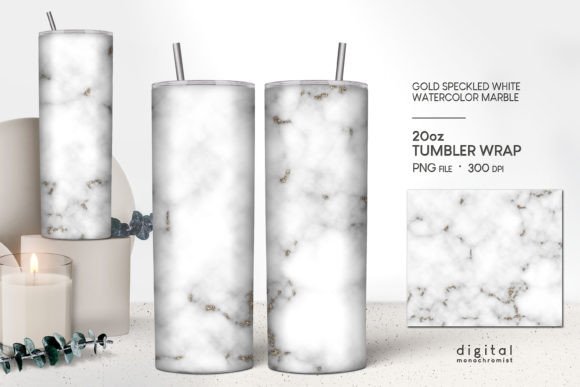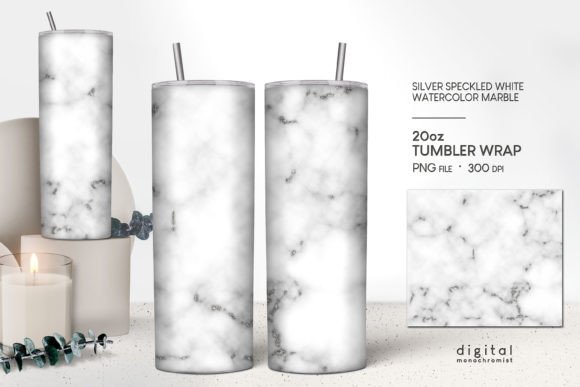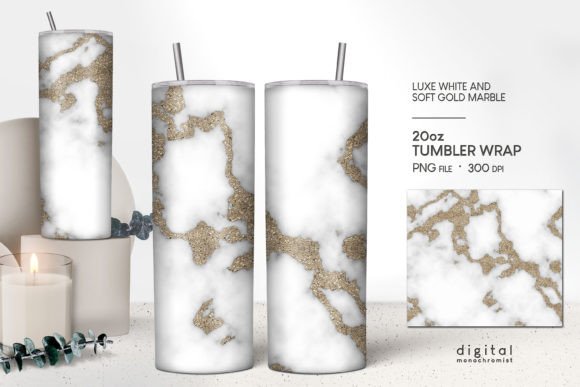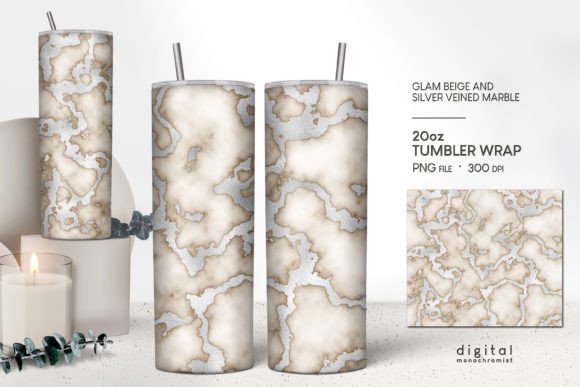
White Marble Silver Veins Tumbler Wrap Review
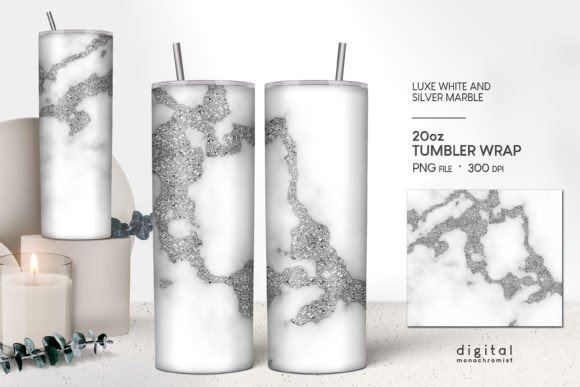
When I first opened the White Marble Silver Veins Tumbler Wrap file, I wasn’t looking at it as a standard sublimation template. I was squinting at the screen, imagining how this swirling, cool-toned graphic would behave once digitized and stitched onto a heavyweight linen tote. The silver veins winding through soft white marble paused me. It’s the kind of restrained, organic pattern that can give a handmade product instant sophistication without screaming for attention—a real asset for a craft business that trades on quiet luxury.
This digital product is listed under Crafts and Graphics, and it arrives as a single PNG file tailored for a straight 20 oz skinny tumbler. But as a designer who moves between paper mockups, embroidery software, and finished goods, I immediately saw it as a design asset that punches far above its tumbler-specific label. The question I asked myself was: can this marble pattern really hold its own when converted into stitches and placed on apparel, accessories, or home décor? The answer is a confident yes, but with a few practical caveats every maker should know before investing time and thread.
First Impressions Are All About Texture and Atmosphere
The mood of the White Marble Silver Veins Tumbler Wrap is calm, polished, and faintly organic. The white base isn’t stark or clinical; it feels like real stone with subtle tonal shifts. The silver veins have a delicate, veiled quality—not chunky metallic ribbons, but slender, irregular lines that suggest handcrafted jewelry or fine ceramics. I can easily picture this on a boutique baby onesie, a bridal party tote, or a minimalist cushion cover. The layout is designed around a tumbler template, but the core visual personality works exceptionally well for rectangular embroidery placements, logos, or decorative patches.
What struck me most was the design’s restraint. It doesn’t demand bold contrasting thread. It invites a monochromatic or tonal thread palette that feels expensive and intentional. For a small shop owner, that kind of understated elegance can set a product apart in a sea of loud, cartoonish machine embroidery designs.
Translating Marble into Stitches: What Works and What Fights You
Machine embroidery lives and dies by stitch density and pathing. A marble pattern like this one is organic, with gentle curves and no sharp angles. That’s a gift for digitizing. The wavy silver veins can be mapped with a smooth satin stitch or a narrow fill stitch, depending on the final size, while the background can remain unstitched—letting the fabric itself serve as the white marble base. That approach saves thread, reduces puckering, and gives the finished product a breathable, modern look.
I’d avoid trying to fill the entire background with white thread. It adds unnecessary bulk, especially on apparel like sweatshirts or baby clothes. Instead, I’d use the negative space of a quality white or cream fabric to mimic the marble’s ground. The silver veins then become the hero element, stitched with a metallic silver thread for a subtle shimmer, or a matte gray for a quieter, stone-like effect. This design choice also cuts production time and cost—music to any Etsy seller’s ears.
Where the Design Sits in a Real Embroidery Project
Let’s ground this in a real scenario. I’m prepping a line of custom embroidered tote bags for a spring craft fair. The theme is “modern heirloom,” and I want each bag to feel personal yet cohesive. I pull the White Marble Silver Veins Tumbler Wrap into my digitizing software. I crop a section of the veins—maybe a 5x7 inch area—and begin tracing the silver lines. After assigning a metallic silver thread and a light gray fill here and there, I run a test on a scrap of heavy cotton canvas with a cutaway stabilizer. The first stitch-out is clean, the veins look organic, and the negative space keeps the tote from feeling heavy. I pair it with a single embroidered initial in a soft script font, and suddenly I have a product that looks like it belongs in a high-end gift shop.
That’s the sweet spot for this graphic. It’s not a standalone embroidery design file; it’s a springboard. You take the aesthetic, pull it into your digitizing workflow, and create a custom stitch file that matches your brand. Because it’s a PNG, you maintain full control over scale, thread choice, and stitch types. That flexibility is huge for a commercial embroidery studio or a solo maker who wants to offer something truly unique.
Stitching Considerations for Real-World Use
Before you commit this design to a finished product, you need to think about fabric, hoop size, and stabilizer. The soft, continuous lines of the marble veins are forgiving, but they can become a problem on highly textured fabrics like terry cloth or heavy knits. I’d steer clear of stretchy fabrics unless you’re confident in your hooping and backing techniques. A woven fabric like linen, quilting cotton, or twill will give you the crispest stitch definition.
Small details matter. The silver veins in the PNG are slender, so when digitizing, you must check the minimum stitch length. If the design is scaled down too far—say, for a cap or a narrow patch—the veins might disappear or become a tangled mess. I recommend keeping the embroidered area no smaller than 4x4 inches for a good representation, and always run a test on the exact fabric you’ll use for the final product. Nothing breaks a customer’s trust faster than a blurry, unrecognizable design.
Dark fabrics are a different challenge. The white marble base won’t come through on a black sweatshirt unless you add a light fill stitch behind the veins. That changes the design’s whole personality. If you’re planning to use this on dark garments, adjust your thread palette and consider adding a soft white or silver toned background fill to make the marble pattern read correctly. Without that, the veins alone might look like random scratches.
Commercial Value and Brand Consistency
For a craft business, visual consistency pays off. The White Marble Silver Veins Tumbler Wrap can become a signature element across your product line. Use it on tote bags, then on sweatshirt cuffs, then on coordinating tea towels, and you’ve built a recognizable brand aesthetic. Customers start to associate that soft, stone-like pattern with your shop. I’ve seen this work beautifully for handmade baby boutiques, wedding embroidery lines, and minimalist home décor sellers.
From a digital product seller’s perspective, this PNG file can also serve as a printable mockup background or a design asset for product previews. But in terms of embroidery, the real value lies in creating a digitized embroidery file from the graphic. Just be sure to confirm the license terms before you sell finished items featuring this design. The product description doesn’t explicitly state commercial use rights, so you’ll need to check with the seller. That’s not a dealbreaker, but it’s a necessary step for anyone running a small shop.
Thread Choices That Make the Design Shine
I’d recommend testing at least three thread variations:
- Metallic silver on a crisp white fabric – gives a modern, jewelry-like finish.
- Matte charcoal gray on a natural linen – earthy, understated, ideal for home goods.
- Soft white with a subtle pearl sheen – for an all-over tonal look on baby items.
Stay away from overly bright whites or stark contrasts unless you want the design to feel more graphic and less organic. The beauty of this marble is in its softness, and your thread should honor that.
Practical Advice for Digitizing and Testing
If you’re new to digitizing from a PNG, here’s a straightforward workflow:
- Import the PNG into your embroidery software and reduce the complexity if needed—focus on the primary vein lines.
- Assign a narrow satin stitch (around 2-3mm width) to the veins, and use a light fill stitch only where you want a subtle shadow effect.
- Set your hoop size appropriately. For a tote bag, a 5x7 or 6x10 hoop works well.
- Always use a medium-weight cutaway stabilizer on woven fabrics, or a no-show mesh on lighter cottons.
- Stitch a test sample on the same fabric you’ll sell. Check for thread breaks, density puckering, and small details that might have been lost.
I also like to print a black-and-white mockup of the design and place it on the actual product to see how the scale and contrast feel. That simple step can save you from a costly misjudgment.
Where This Design Really Belongs
After several test runs and a lot of squinting, I’ve found the White Marble Silver Veins Tumbler Wrap truly shines on:
- Linen tote bags and drawstring pouches
- Boutique baby bibs and onesies
- Personalized wedding handkerchiefs or ring pillows
- Minimalist kitchen towels and aprons
- Soft sweatshirt sleeve accents (small, single placement)
It’s less suited for high-wear items like caps, where the curved surface distorts the veins, or on heavily textured fleece that swallows fine detail. Also, avoid using it as the main design on a heavily washed garment—the continuous washing can wear down metallic threads and make the veins look patchy over time.
Final Thoughts for Makers and Shop Owners
The White Marble Silver Veins Tumbler Wrap is a deceptively simple digital graphic that, when used thoughtfully, can elevate a handmade product from crafty to curated. It’s not an embroidery file you can load and stitch immediately, but that’s actually its strength. It gives you a creative starting point—a mood, a texture, a visual language—that you can adapt into a machine embroidery design that fits your brand perfectly.
If you’re a designer who regularly digitizes your own patterns, or you’re building a cohesive product line for Etsy or craft fairs, this PNG is worth adding to your design assets. Just remember to test thoroughly, keep your stitch density in check, and always confirm the license before you sell. With a little care, that elegant marble will do exactly what you want it to: make your customers pause, smile, and reach for their wallet.